Germany continues to grapple with a shortage of skilled workers as older employees retire and there are not enough young candidates to fill their positions. To help address the problem, the country is increasingly turning to workers from India.
For Handirk von Ungern-Sternberg, it all began with an email that landed in his inbox in February 2021. It had come from India.
The gist of the message was: “We have lots of young, motivated people looking for vocational training, and we’re wondering if you’re interested.”
Von Ungern-Sternberg was working for the Freiburg Chamber of Skilled Crafts in southwest Germany, a trade association that represents skilled workers—from bricklayers and carpenters to butchers and bakers—and the companies that employ them.
The email arrived at just the right time.
“We had a lot of desperate employers who couldn’t find anyone to work for them,” says Von Ungern-Sternberg. “So we decided to give it a try.”
His first call was to the head of the local butchers’ guild. Butchers all over Germany were having a particularly hard time. It was an industry in sharp decline.
From 19,000 small, family-run businesses in 2002, fewer than 11,000 remained by 2021. Employers were finding it almost impossible to recruit young people to take on apprenticeships.
“The butchery trade is hard work,” says Joachim Lederer, head of the butchers’ guild. “And for the past 25 years or so, young people have been choosing other paths.”
Back in India, at Magic Billion, the employment agency that had sent that initial email, they managed to recruit 13 young people, who arrived in Germany in the fall of 2022 to begin their butchery apprenticeships in small towns along the border with Switzerland. They would spend part of their time in college.
Among them was a 21-year-old Indian woman who asked that her name not be used. Like many of her peers, it was the first time she had ever left India.
She remembers how excited she was. “I wanted to see the world,” she says. “I wanted to raise my standard of living. I wanted good social security.”
She had come to work in the town of Weil am Rhein, in the far southwestern corner of Germany, bordering both Switzerland and France.
Three years later, a lot has changed. Von Ungern-Sternberg no longer works at the chamber.
Instead, he has set up his own employment agency, India Works, in partnership with Aditi Banerjee of Magic Billion, to help bring more young Indian workers to Germany.
Of those original 13, there are now 200 young Indians working in German butcher shops.

Germany is facing a demographic crisis.According to a 2024 study, the economy needs to attract 288,000 foreign workers per year.Otherwise, the workforce could shrink by 10% by 2040, according to the report by the Bertelsmann Foundation think tank.
As the last of the baby boomer generation begin to retire, there aren’t enough young Germans to replace them, due to a low birth rate. But there are plenty of young people in India.
“India is a country with 600 million people under the age of 25,” says Banerjee. “Only 12 million enter the workforce each year. So there’s a huge labor surplus.”
India Works is preparing to bring 775 young Indians to Germany this year to begin their apprenticeships. The range of professions they will enter is extensive. These include road builders, mechanics, stonemasons, and bakers, to name just four.
It has been easier for skilled Indian workers to find employment in Germany since the two countries signed the 2022 Migration and Mobility Partnership Agreement. Then, at the end of 2024, Germany announced that it wouldincrease the quotaforskilled worker visasfor Indian citizens from 20,000 per year to 90,000.
Official German figures show that in 2024 there were136,670 Indian workersin the country, up from 23,320 in 2015.
Young Indians who have found employment in Germany through India Works offer similar explanations for their decision to try their luck in a new country—the difficulties of finding a job in India, the higher salaries available in Europe, and the ambition to make their own way in life.
Take Ishu Gariya, for example, a 20-year-old who, after graduating from high school in India, was considering pursuing a college degree and a career in computer science. “But I didn’t want to waste my money on a degree only to end up working at a company for a low salary,” he says.
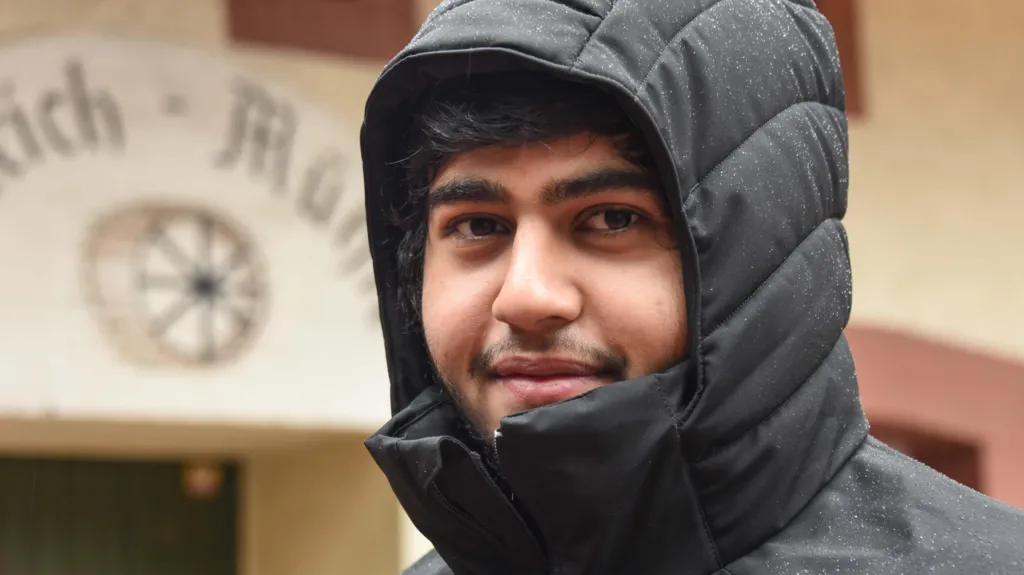
So he traded a Delhi suburb for a village in Germany’s Black Forest region, where he’s a baker’s apprentice. His shift didn’t end until three in the morning, and he’s wrapped up in a hooded down jacket to keep out the winter weather. But he’s happy.

“Wages are high here,” he says. “So I’ll be able to support my family [back home] financially.”
And he says he loves the fresh air in the German countryside.
Ajay Kumar Chandapaka, 25, came from Hyderabad to join Spedition Dold, a trucking company based in a village outside the city of Freiburg. He holds a bachelor’s degree in mechanical engineering.
“It was very difficult for me to find a job in India,” he says. “So I thought that an apprenticeship would be a better option for me.” “Ausbildung” is the German word for training or apprenticeship.
Source: Germany is turning to Indian workers to help address the labor shortage