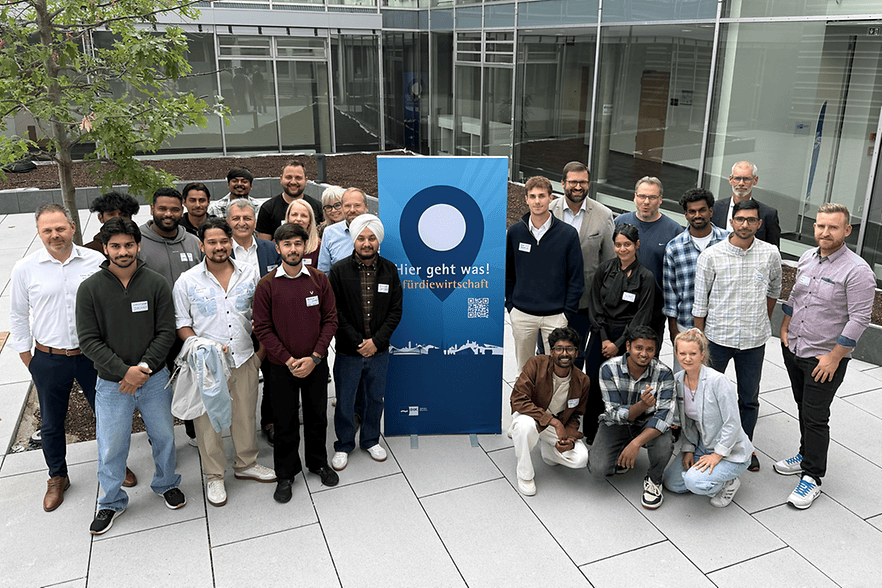
The shortage of skilled workers continues to be one of the biggest challenges for German companies. Industries such as healthcare, logistics, construction, industry, and the hospitality industry have been struggling with unfilled positions and increasing staffing needs for years.
Despite economic fluctuations, demand for qualified labor remains high. Numerous companies are facing long vacancies, rising recruitment costs, and increasing workloads for their existing teams.
Against this backdrop, international talent acquisition is becoming increasingly important. In particular, collaboration with specialized staffing services enables companies to access qualified talent from abroad and helps them sustainably reduce personnel shortages.
The shortage of skilled workers is a structural challenge
Current analyses by the Federal Employment Agency continue to show significant shortages in numerous occupational groups. Particularly affected are professions that are of central importance for Germany’s economic performance.
Healthcare
The healthcare sector continues to be among the most affected sectors.
Especially in demand are:
- Nursing staff
- Professionals in the field of elderly care
- Medical assistant professions
- Specialized healthcare professionals
The demographic change and the aging population lead to the continuous increase in the demand for qualified personnel.
Logistics and transport
The logistics industry is also under considerable pressure.
Companies are looking for, in particular:
- Professional drivers
- Warehouse and logistics professionals
- Employees in supply chain management
- Professionals for distribution and handling centers
Professional drivers in particular have been among the professions with particularly high recruitment difficulties for years.
Construction and trades
Construction companies and tradesmen’s associations are also reporting increasing shortages of personnel.
Especially sought after are:
- Electrician
- Electrical and Mechanical Systems Engineer
- Installers
- Carpenters and woodworkers
- Professionals in the underground and civil engineering sector
At the same time, many experienced professionals reach retirement age, creating additional gaps.
Hotel and restaurant industry
The staffing situation remains strained even in the hospitality industry.
Companies are continuously looking for:
- Cooks
- Kitchen professionals
- Hotel staff
- Service workers
Qualified chefs in particular are regularly among the professions with proven shortages of skilled workers.
Why national recruitment often no longer suffices
Many companies have already exhausted all the traditional recruitment methods:
- Job portals
- Regional recruiting campaigns
- Employee referral programs
- Training initiatives
Nevertheless, numerous positions remain unfilled for months on end.
The challenge often lies not in obtaining applications, but in finding qualified candidates with the necessary expertise, qualifications, and the necessary willingness to work.
For this reason, international recruitment becomes an important component of their human resources strategy for many employers.
How human resources service providers close skills gaps
Modern HR services today take on much more than just candidate sourcing. They create structured processes that help companies attract international talent efficiently and in compliance with local laws and regulations.
Access to qualified talent pools
Experienced international recruiting partners have established networks in key source countries such as India.
Potential candidates are often already screened in advance by:
- Qualification review
- Reference checks
- Analysis of professional experience
- Language tests
- Professional suitability assessments
This gives employers significantly faster access to suitable candidates.
Shorter setup times
International staffing agencies coordinate numerous process steps simultaneously.
These include, for example:
- Candidate search
- Pre-selection
- Documentation management
- Interview coordination
- Recognition processes
- Visa procedures
This significantly reduces the organizational effort for companies.
Also read: Hiring Indian professionals in Germany: A practical guide for employers
Preparation before entering the country
Successful personnel acquisition does not end with the signing of a contract.
Many specialized service providers also offer preparation programs that cover, among other things, the following areas:
- German language training
- Intercultural preparation
- Orientation to everyday life in Germany
- Support for entry
- Preparation of required documents
These measures facilitate later integration and promote long-term employee retention.
The importance of the skilled worker immigration law
With the further development of the skilled worker immigration law, the framework conditions for international recruitment have been significantly improved.
The goal of the reforms is to make it easier for qualified professionals to access the German labor market and to give companies more leeway in recruiting personnel.
For employers, the following advantages result from this:
- Access to larger international talent pools
- Expanded recruitment opportunities in shortage professions
- Improved framework conditions for the recognition of foreign qualifications
- More flexibility in filling open positions
This further increases the importance of cooperation with specialized international recruiting partners.
Direct recruitment or staffing services?
For many companies, the question arises as to which route is more efficient for attracting skilled workers.
Direct international recruitment
With independent recruitment, companies usually have to coordinate all steps themselves:
- Job advertisement
- Candidate search
- Interviews
- Qualification exam
- Recognition procedure
- Visa processes
- Planning the entry
Depending on the profession and the complexity of the procedure, such processes can take many months to complete.
Recruitment through specialized service providers
Human resources providers often already have:
- Existing talent pools
- International recruitment networks
- Standardized selection procedures
- Proven mobility and integration processes
This makes it possible to organize many process steps more efficiently and address personnel shortages more quickly.
However, the actual duration always depends on factors such as professional group, visa procedures, recognition processes, and candidate availability.
Why India is becoming increasingly important as a talent market
For many German companies, India is developing into a strategically important recruitment market.
There are several reasons for this:
- Large number of qualified professionals
- Strong technical and vocational training systems
- Growing German-learning programs
- Experience in industries such as healthcare, engineering, logistics, and the trades
- Long-term available workforce potential
For companies that want to permanently fill open positions, India offers attractive opportunities to expand their talent strategy.
Successful personnel acquisition does not end with hiring
The long-term commitment of international professionals depends largely on successful integration.
Employers should therefore also consider the following aspects:
- Technical and social induction
- Language support
- Support in administrative processes
- Intercultural onboarding
- Development prospects within the company
Many human resources services are now assisting companies well beyond the recruitment process, actively supporting the integration of new employees.
Conclusion
The shortage of skilled workers in Germany is no longer a short-term challenge. Companies in the healthcare sector, logistics, construction, crafts, and the hospitality industry continue to face significant recruitment problems.
International talent acquisition is therefore increasingly becoming a central component of modern HR strategies. Specialized staffing services help companies identify qualified talent, streamline recruitment processes, and successfully integrate international talent into the labor market.
In particular, by recruiting skilled workers from India, experienced partners can help sustainably reduce personnel shortages and build long-term staff stability.
Also read:- Germany is facing a labor shortage – that is why it is relying on India for support.
Frequently asked questions (FAQ)
Which industries are particularly affected by the shortage of skilled workers?
The healthcare sector, logistics, the construction industry, the craft sector, the hotel and restaurant industry, and various technical professions are particularly affected.
Why are German companies increasingly recruiting professionals from India?
India has large pools of qualified professionals in fields such as nursing, engineering, logistics, hospitality, and the skilled trades, and offers long-term talent potential.
How do staffing agencies support international recruitment?
Among other things, they are responsible for candidate search, pre-selection, documentation, recognition procedures, visa coordination, and integration measures.
Has the Skilled Immigration Act made recruitment easier?
Yes. The legal adjustments have created additional opportunities to attract qualified professionals from third countries to the German labor market.
Is recruitment through a staffing agency faster than hiring directly?
Often yes. Existing talent networks and standardized processes can make many processes more efficiently organized. However, the actual duration depends on the individual case.