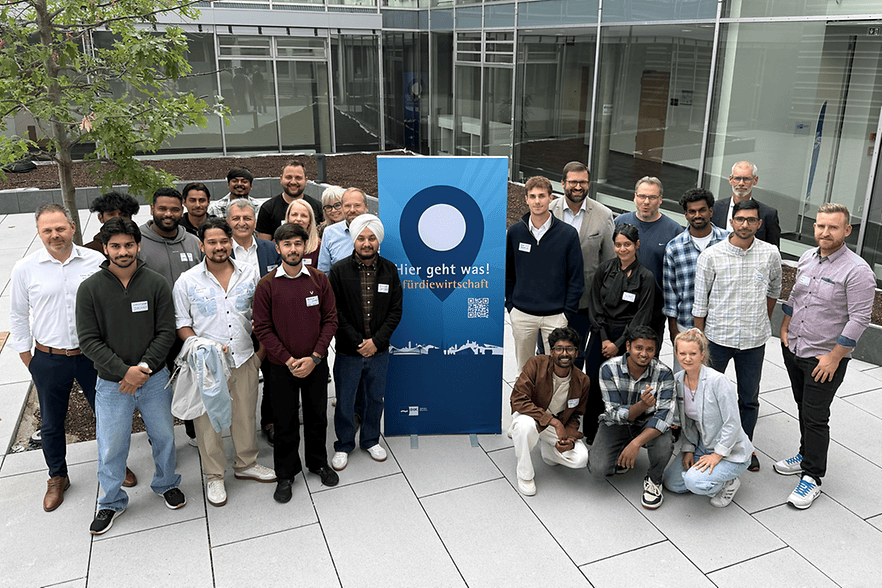
German employers continue to face long-term staffing pressures in many industries – including healthcare, elderly care, logistics, hospitality and catering, production, engineering, and manual and technical professions. For many companies, today it is no longer just about filling open positions. The key is building reliable teams that ensure service quality, productivity, and business continuity in the long term.
Exactly here it will be Labour market integration in Germany relevant.
For employers, international recruitment does not end with selecting suitable candidates. A successful process includes personnel planning, candidate screening, document preparation, Recognition, Visakoordination, preparation before entry, onboarding, and long-term commitment.
Qualified professionals from India are increasingly becoming an important component of international human resources strategies in Germany. However, for this path to work successfully, legally secure, and sustainably, employers need a clear and well-structured process from the outset.
This guide explains how German employers can practically, ethically and sustainably integrate skilled workers from India into their workforce.
What labor market integration means for German employers
Labour market integration in Germany describes the process of preparing international professionals, hiring them, relocating them, training them, and keeping them in the company for the long term – so that both employers and employees can benefit in a sustainable way.
For German companies, integration connects several important areas:
- Personnel planning
- Candidate examination
- Qualification exam
- Documentation
- Preparation for the German language
- Recognition requirements
- Visas coordination
- Support with the move
- Onboarding at the workplace
- Long-term employee retention
Recruitment opens the door. Integration determines whether the hiring is successful in the long term.
A structured integration process helps employers reduce avoidable delays, improve document readiness, support recognition and visa processes, prepare employees before their arrival, and build more stable international teams.
Labour market integration: step-by-step overview
| Phase | Task of the employer | Why it is important |
| Personnel planning | Define roles, salary, language level and qualification requirements | Prevents inappropriate settings |
| Candidate examination | Check skills, experience, documents and willingness to relocate | Improves the fit to the role |
| Recognition examination | Determine whether professional recognition is required | Reduces legal risks and delays |
| Visas coordination | Prepare employer documents and job information | Supports regulated labor mobility |
| Preparation before entering the country | Plan accommodation, travel, registration, and onboarding support | Helps employees get to work faster |
| Onboarding at the workplace | Introducing leadership, teams, processes, and expectations | Improves early performance |
| Binding measures | Offer language support, check-ins, mentoring, and development perspectives | Strengthens long-term stability |
Why German employers are building international talent pipelines
Germany continues to experience staffing shortages in sectors where stable staffing is crucial. These gaps can directly impact shift planning, productivity, customer service, the workload of existing teams, and long-term growth.
- Commonly affected areas are:
- Healthcare and elderly care
- Industrial production
- Logistics and warehousing
- Hotel industry, gastronomy and food services
- Craft professions
- Engineering and technical services
- IT and digital processes
Many employers are therefore shifting from reactive individual recruitment to planned international talent pipelines. Instead of viewing each vacancy in isolation, companies are developing repeatable systems for talent access, preparation, integration, and long-term retention.
This approach is particularly important when foreign professionals are hired who require document checks, qualification recognition, German language preparation and visa coordination before starting work in Germany.
Why skilled workers from India are a strategic talent source
India has a large pool of well-educated, technically skilled, and professionally trained professionals. For German employers, skilled workers from India can support personnel planning in sectors where the domestic labor market alone cannot meet the demand.
- Employers often consider Indian professionals based on their:
- Technical and professional qualifications
- Formal educational qualifications
- Experience in healthcare, logistics, hospitality, production and technical professions
- Commitment to long-term international career paths
- Increasing German preparation
- Adaptability in multicultural work environments
Many employers also look for candidates with German language skills at B1 or B2 level, relevant professional experience, complete documentation, and a willingness to meet professional legal requirements in regulated professions.
The goal is not short-term replacement. The more sustainable approach consists of building a stable pipeline of skilled professionals that supports both business continuity and the long-term success of employees.
Important steps towards the integration of skilled workers from India in Germany
Step 1: Clearly define staffing needs and role requirements
Before employers hire skilled workers from India, HR, operational departments, management, and the business management should be coordinated internally.
- Employers should clarify:
- Which roles are difficult to fill locally
- What qualifications are required
- Whether it is a regulated or non-regulated profession
- What German level is required
- What compensation and working conditions apply
- Whether accommodation or assistance with moving can be offered
- Who supports the employees after their arrival
- What realistic time schedule the company can adhere to
This early planning helps employers assess whether international recruitment is suitable for the respective role and what support will be needed later on.
Step 2: Check skills, qualifications and language proficiency
The candidate assessment should go beyond a simple resume evaluation. Employers must assess whether an individual is suitable for the role and workplace on a professional, linguistic, cultural, and long-term basis.
- The examination should include:
- Proof of education
- Professional or technical certificates
- Employment history
- Professional experience
- German language level
- Ready to move
- Long-term career plan
- Completeness of the documents
In healthcare, elderly care, technical and customer-oriented roles, linguistic preparation is particularly important. German training before arrival can reduce communication barriers and strengthen safety in everyday work.
Step 3: Review recognition and documentation requirements
Recognition refers to the professional recognition of foreign qualifications in Germany. In this process, it is examined whether a foreign professional qualification is comparable to the corresponding German qualification.
Some professions are regulated. This means that professionals may need formal recognition or a professional license before they can work in Germany. This applies in particular to healthcare and nursing professions, certain technical trades, and certain engineering-related activities.
Recognition requirements can vary depending on:
- Professional category
- Federal state
- Competent authority
- Type of qualification
- Visa process
- Quality and completeness of the documents
Employers should prepare the documentation early. This may include educational qualifications, training certificates, work certificates, language certificates, passport documents, professional-specific proof, and certified translations, if necessary.
Clear documentation processes can significantly reduce avoidable delays in recognition and visa coordination.
Step 4: Coordinate visa and employer administration
Visa coordination is one of the most sensitive phases in the international settlement process.
Depending on the role, qualifications, salary level and recognition status, various paths may be relevant, including:
- Visa routes for qualified professionals
- 18a Residence Act for professionally qualified professionals
- EU Blue Card for suitable academic roles
- Visa procedures in connection with recognition procedures
- Professional-specific mobility paths under the Skilled Immigration Act
On the employer’s side, the following documents and information may be required:
- Employment contract or binding job offer
- Job description
- Salary information
- Working hours
- Qualifications certificates
- Certificate of recognition, if applicable
- Administrative coordination with relevant authorities and partners
- Employers should use official information sources and seek qualified legal or migration-specific advice on individual case-specific questions.
Step 5: Prepare pre-arrival and post-arrival onboarding
Successful integration begins even before employees arrive in Germany.
Employers should prepare support for:
- Accommodation coordination
- Travel and arrival planning
- Support for local registration
- Health insurance
- Opening a bank account
- Orientation in public transport
- Workplace orientation
- Cultural onboarding
- Continued language development
- Presentation of leaders and teams
The first 90 days after arrival are particularly crucial. Employees who receive clear support adapt more quickly, communicate more confidently, and remain more engaged.
A structured onboarding process also helps leaders clearly communicate expectations and avoid early misunderstandings.
Step 6: Build long-term commitment
Labour market integration does not end after onboarding. Long-term success depends on continuous support, clear communication, and fair working conditions.
Employers can improve employee engagement by:
- Regular check-ins with senior management
- Continuing language support
- Mentoring or buddy systems
- Clear performance expectations
- Talks on professional development
- Support for cultural adaptation
- Transparent employment conditions
- Measures for well-being and integration
For many organizations, staff stability is not achieved through repeated recruitment, but through the successful integration of already established international employees.
Responsibilities of employers and compliance aspects
German employers play a central role in organizing international recruitment processes in a way that is transparent and compliant with regulations.
Responsibilities of employers may include:
- Defining realistic job requirements
- Provide correct employment documents
- Documents related to recognition are supported
- Ensure transparency regarding salary and working conditions
- Coordinate with recruitment and mobility partners
- Prepare onboarding and integration support
- Clearly communicate with female candidates
- Observance of deadlines, documents and responsibilities
A clear process reduces friction between HR teams, government agencies, recognition authorities, operational departments, and integration partners.
Employers should also note that requirements can vary depending on the profession, location, type of visa, and individual case.
Ethical recruitment and the employer-pays principle
Ethical recruitment is gaining increasing importance in international labor mobility. Employers have a responsibility to ensure transparent and fair processes for international workers.
- Responsible recruitment includes:
- Clear employment conditions
- Transparent salary information
- No misleading job promises
- Proper documentation
- Fair onboarding conditions
- Compliance-oriented recruitment
- Transparent communication regarding deadlines and responsibilities
Many international mobility standards are based on Employer-Pays principle. After that, female employees should not have to bear excessive recruitment-related costs associated with the recruitment process.
For employers, ethical integration is not just a compliance issue; it also strengthens employer reputation, employee trust, and long-term commitment.
Costs, timeframes, and risk factors for employers
Labour market integration involves cost and time factors that vary depending on the industry, profession, recognition requirements, language preparation, necessary relocation, and administrative complexity.
| Planning area | What employers should consider | Risk without proper planning |
| Recruitment | Candidate search, examination and selection | Poor fit for the role |
| Language preparation | German learning path and required language level | Communication problems in the workplace |
| Documentation | Certificates, translations and proofs | Delays in recognition or visa issuance |
| Recognition | Requirements for regulated professions and deadlines for authorities | Employees may not be able to start work if necessary |
| Visas coordination | Employment documents and administrative steps | Delayed entry and employment |
| Relocation | Travel, arrival planning and accommodation | Stress after arrival |
| Onboarding | Job orientation, registration and local facilities | Early terminations or uncertainty |
| Bonding | Language support, leadership support and career planning | Repeated recruitment cycles |
Employers should view international recruitment as a long-term personnel investment. The value lies not only in filling open positions, but also in improving continuity, reducing personnel instability, and building reliable talent pipelines.
Example: How labor market integration works in practice
A German care provider who wants to hire skilled workers from India must prepare several steps before the employees arrive.
This can include role planning, German requirements, qualification testing, recognition documentation, employment contracts, visa coordination, support with accommodation, local registration, and onboarding at the workplace.
If these steps are not started until after the candidate selection process has begun, the process can become slow and unclear. However, if they are planned early, the employer can reduce uncertainty and create a smoother path for companies and employees.
How IndiaWorks supports labor market integration
IndiaWorks supports German employers in establishing international career paths for skilled professionals from India.
The support can include:
- Analysis of personnel requirements
- Candidate search and preliminary selection
- Coordination of skills and qualifications
- Support with German preparation
- Guidance on documentation requirements
- Support in the recognition and visa coordination process
- Preparation before entering the country
- Onboarding and integration planning
- Binding-oriented personnel support
For employers, this approach helps reduce uncertainty and build a more predictable hiring and onboarding process.
Frequently asked questions
What does labor market integration in Germany mean?
Labour market integration in Germany refers to the process of preparing, hiring, relocating, training and retaining international professionals through documentation, qualification recognition, visa coordination, workplace orientation and long-term support.
Why do German employers hire skilled workers from India?
German employers recruit skilled workers from India because India has a large pool of technically trained, professionally qualified and internationally mobile professionals. These can contribute to workforce stability in sectors affected by shortages of skilled workers.
What steps are involved in labor market integration?
The process typically includes personnel planning, role definition, candidate screening, examination of professional recognition, visa documentation, pre-entry support, onboarding, language development, and long-term engagement planning.
Do skilled workers from India need recognition in Germany?
Whether recognition is required depends on the profession. Regulated professions generally require formal recognition or a professional license. In the case of non-regulated professions, comparability of qualifications and complete documentation may be relevant.
What is the Skilled Immigration Act?
The Skilled Immigration Act is the legal framework in Germany that facilitates access for qualified professionals from non-EU countries, including India, to certain employment migration routes.
How can employers improve the commitment of international professionals?
Employers can improve engagement by structuring accommodations, workplace orientation, local onboarding, language development, regular leadership check-ins, cultural onboarding, transparent employment conditions, and long-term career prospects.
What documents should employers prepare if they are hiring skilled workers from India?
Depending on the role and the visa route, employers may need to prepare a job offer or employment contract, a job description, salary information, working hours, qualification documents, recognition-related documents, and other supporting documents.
Conclusion
Labour market integration in Germany should be understood as a long-term personnel strategy – not as a one-time recruitment measure.
For German employers, sustainable results depend on clear planning, qualification testing, preparation for recognition, visa coordination, ethical recruitment, onboarding, and long-term commitment.
As shortages of skilled workers continue in many critical sectors, qualified professionals from India can become an important part of Germany’s future workforce strategy. Employers that approach integration clearly, responsibly, and in a structured manner are better positioned to build stable, compliant, and resilient teams.